
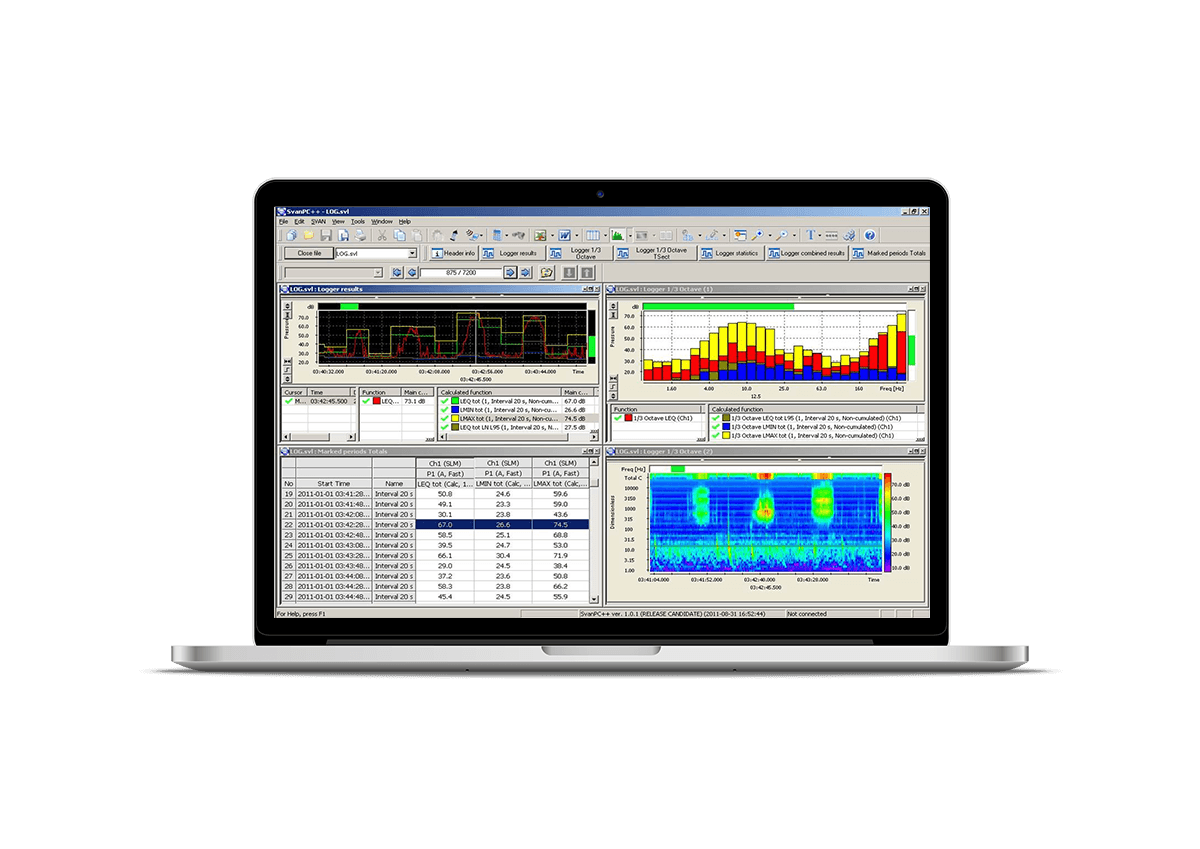

Looking for professional product to monitor noise weighting?
At AcSoft, we supply a comprehensive range of noise measurement and monitoring instruments designed to support accurate, compliant noise assessment across industries:
- Noise Monitoring Stations — Rugged outdoor systems like the SV 307A provide long-term, continuous monitoring with certified MEMS microphones and integrated data logging for environmental noise projects.
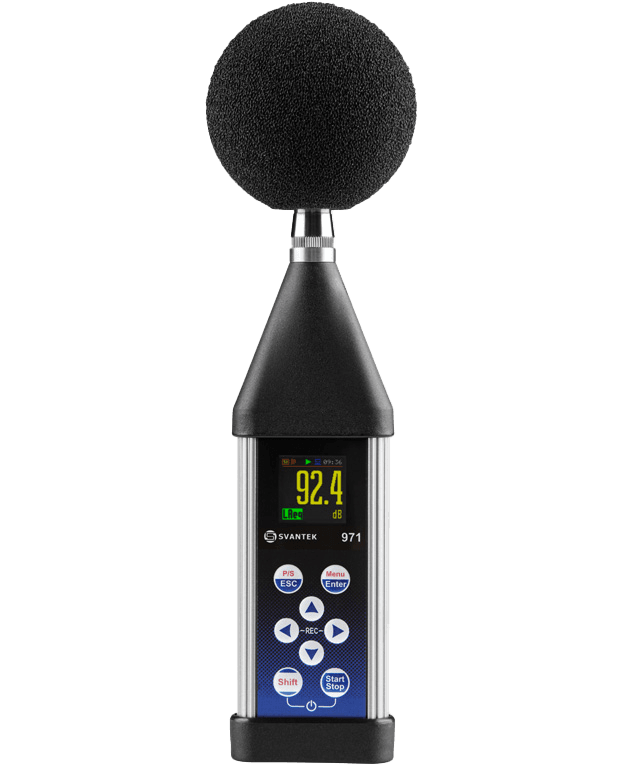
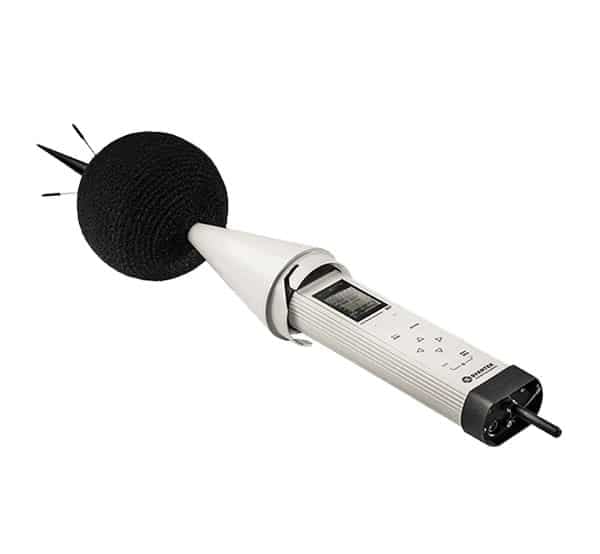
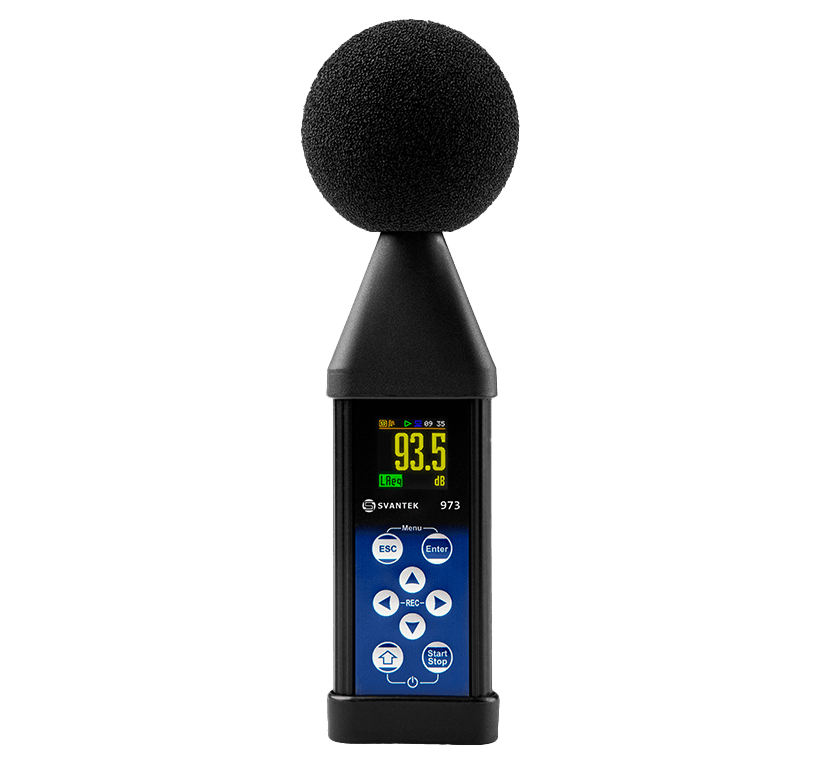
- Sound Level Meters & Analysers — Portable Class 1/2 sound level meters and multi-channel analysers (e.g., NoisePAD systems) enable real-time noise measurement with flexible frequency and time weighting options for workplace, construction, or R&D use.
Knowledge Articles
Understanding Noise and Noise Weighting
Where Can You Use the NoisePAD?
When it comes to analysing noise and vibration on site, we know that you’re constantly on the move. That’s why you need portability, and durability. And few instruments pack as much capability into such a compact form as the NoisePAD™ from SINUS. At less than a kilogram in weight, this…
What is Dynamic Range, Frequency Range and Sensitivity?
When you’re choosing a microphone, whether for recording music, capturing environmental sounds, or monitoring industrial noise, the technical specs can feel like a foreign language. Terms like sensitivity, dynamic range, and frequency response might sound intimidating, but they’re actually pretty straightforward once you break them down. In this guide, we’ll…
The Ultimate Guide to Picking the Right Measurement Microphone
We understand that the burden of picking your next measurement microphone; maybe you have started a new project, or your current microphones need replacing… Or maybe you’re getting your first ever set of microphones? Whatever the reason, let’s just say that trawling through endless datasheets, tables, graphs and charts isn’t…
The Many Uses of the SV 303 Urban Noise Monitor
The SV 303 has recently been released by Svantek. This adds to the already powerful ecosystem of industry leading noise and vibration monitors as well as the ground-breaking apps and programs that support these. The SV 303 is a Class 1 noise monitor designed for accurate and real-time noise measurement…