
So, who’s idea was it to build this house in a house?
It was the original House within in a house, there’s quite a few that popped up. Well it’s not quite the original because the original actually was our friend Pro Clima in New Zealand so we were asked to go and do some training over in New Zealand as you know spend a lot of my life on a plane. We went to their place and someone over there decided to do it, but they decided to do it for a completely different reason. Their reason was they were teaching people building wraps, building membranes and tapes. And they had a setup where they had a house very similar to this and they were using it to do membrane installation. I went there and we taught an air tightness class there and an 3D modelling envelope area class and I looked at it and said we need this in the UK we could do so much more with a facility like this. Not they weren’t doing enough but it was very niche to what they what they do I think they’ve now actually expanded it and all and all props to them. I thought at the time hey we could add a sound suite we could do ventilation we could do solar panels we could do a lot with the space if we had one in the UK and at the time ATMMA had made a reasonable Surplus so we took the money from ATTMA and some money at that point from SITMA and said what do we want to do this? Do we want to just reinvest it in different ways let’s do something that nobody else is doing, let’s make sure that when we train people, we never have to retrain people. We train people on actual buildings and an actual sound. To answer your question the inspiration came from Pro CLIMA NZ, we took what they did and just expanded on it and we’re really proud of it.
So, are you doing testing on air source heat pumps at all is that in your plans?
Yeah, I mean the business model that we have is typically two weeks out of every four we do training here, so that might be everything from air tightness ventilation, acoustics and noise control right through to doing weird and wonderful training. We hire out the facility as well so two weeks out of four we use the facility ourselves and the other two weeks we hire the facility out to other people and the heat pumps you see around the building. The electric the battery storage, the air conditioning stuff, the unvented hot water… all of that stuff is our customers and our clients and our friends coming here using hiring the facility instead of doing their training in hotels. In 2019, 2018 there was a huge amount of training happening in in hotels and that was also part of the inspiration, let’s get people into real world facilities. When we do ventilation here and we do our training course we actually measure real ventilation systems, we have 21 different ventilation systems set up here that are used as part of the training course and that was the difference. We wanted to be less theory and more practical and.
There’s nothing more depressing than being in a hotel for training I can tell you that for free
SITMA in its very early days, in its infancy, decided from day one what it was and what it was always going to do and therefore SITMA is very much a certification scheme for testers to do testing. SITMA, 90% of the people of the certified persons in in SITMA are not acoustic consultants, we do have some great acoustic consultants within our scheme and fantastic that they want to be part of what we do, but most of the scheme isn’t. And therefore, we have certain protections around that. So, we do huge amounts of data checking with the SITMA lodgement portal we take raw data from the sound level meters and automatically create the report, it substantially minimizes the possibility of errors. We also have one of the best quality checking processes in construction, I’m going to throw out there, in construction. Because we know where people are before they go. So, one of the rules of SITMA is by midnight the night before the test is that you must tell us where you’re going before you go there and therefore, we can just turn up unannounced on any construction site. I can pull up a list now and I would maybe have 25 different job sites that currently have a SITMA testers on them and I can just turn up to one and we do sometimes, and we have done that, and we have found people, and we have kicked them out of SITMA. No certification scheme comes without risks and without bad people, every everything in the world has that same issue you know otherwise we wouldn’t need the certification scheme in the first place, would we?
The it exam I would add, in answer to your quality thing, is the examination is incredibly difficult. One of the points that UKAS made when they came to asses us was that they felt our exam was too easy. We showed them the data that shows our past fail rates. We also capture the data for other certification schemes, we capture data for other UKAS companies when they come. And with our exam, typically the people that do the training here we have about an 80% pass rate I think it was 82% the last time I looked. Of the people that came from existing ISO 17025 companies the pass rate was way down in 50%. That’s one in every two failed to meet the SITMA requirements… So we absolutely see a lot of the people that come from the industry sit the SITMA exam and they have this assumption that we are the easy route… and they fall miserably! They fall flat on their faces! I don’t want to be amused about it, that’s not that’s not the point, but there is there is something that says we’ve been, not laughing stock, but there’s a lot of people out there that just have assumed SITMA is the easy route, and for us to turn around and say actually no it’s not, because more people fail our exam than pass it, shows that.
That’s just the just the theory you then get to the witness assessment, and we are hard on people if you ask anyone there’ll be a bunch of people who come across us on a on a bad day and have felt the wrath of what we do and they themselves have had to pull the socks up. So absolutely we are definitely not the easy route, our quality remains high. We hold UKAS accreditation to ISO 17024. To my knowledge we are the first sound insulation testing scheme in the world to hold ISO 17024 accreditation. There was no path that we could set that said hey fill out this document and do it this way, we’re the first people to do it and that actually makes me smile because everybody else is now in our wake we’ve set the ball and the standards so high that anyone else that tries to it is in our turbulence behind us
So, you’re a sound insulation tester or you or you want to be one, what paths have you got in front of you? Obviously you’re one of them and what makes you different to anyone who’s aspiring to be a sound tester?
It’s certainly not the easy route as I said. What makes us different is the if you look at the existing routes so previously you had UKAS ISO 17025. That’s a company accreditation it’s not an easy accreditation to gain and it sets the bar pretty high. I would say it’s a tough thing to get it’s a tough thing to manage. That was option one, option two is be a member of the ANC and then join their tester certification scheme, I’m not sure the entire full name of the thing is. And now we are this option number three. Which is you’re able to demonstrate either prior experience or sit a recent training course and be able to then take the SITMA exam. So in terms of entry or pathways, we know the UKAS 17025 bit is difficult but it suits big companies, especially if you already have 17025 or something different. The ANC have their model and their way of thinking and their way of doing what it is they do, great. But for us, the pathway is for the BCTA to have an examination and then quite tough examination routes so theoretically anybody can become a tester but it’s not quite as easy as that.
And you get good coffee here as well.
You get great coffee here yeah one of the things we’re super proud of!
I want to talk a little bit about UKAS. I know that was a massive effort by you and the team tell us the journey.
It was a pretty difficult one if I’m honest, a slightly complicated one so stick with me. But it all started in 2018 when SITMA was born. We tried really hard to speak with UKAS and initially go for 17065 accreditations.
What’s 17065?
17065 is where we would be accredited to accredit businesses or companies to do what they do. But UKAS had come to us and said we can’t do that; we have a pretty major conflict of interest. The only way you could do that then is to go to an international provider. So, we then went to the American national accreditation bodies and said let’s get this going. And we spent about a year trying to work with them and trying to make it happen, but it was quite evident after maybe 9-10 months that they just don’t understand the building regulations. The technical people aren’t quite there, and it was just a it was just something that clearly wasn’t working. So, we went back to UK and said how can we do this what do we need to do in order to get ourselves accredited and they said you could do 17024, which is Personnel certification. 17024 being the individual person is the person that’s accredited and we said great it’s kind of how the industry works anyway let’s make that happen. So, we shifted everything we did from a company perspective to a personnel perspective. We had everybody had to reapply to SITMA and we started that Journey with uh with UKAS. Of course, 2019, 2020, pandemic, moved into here, delay, delay, delay
So, you started the journey before you were here?
Oh, way before way before it was a full five year process, it just took a long time but eventually we got there we got ISO 17024 uh and it was a Monumental task
I can pre-empt your next question, why do we need UKAS?
Right exactly.
Well initially I thought we didn’t, the ANC don’t have UKAS why do we need UKAS? Well, I used to think that was the case. I used to think why do we need it? We can we’re doing a perfectly good job as we are and then when we really dug into UKAS. We decided at that point to employ a quality manager, shout out to Phil upstairs. Phil took what we did and just turned everything on its head and instead of us saying we’re good pointed out you can do better, you can do better, he pushed us and pushed us and pushed us and that completely changed the game. And now, I actually say different, I say we need UKAS, because UKAS makes us a better company. And it pains me to say that, and sorry UKAS, I used to have a very negative view on UKAS and think it wasn’t this big thing and it’s overrated and it’s very expensive. Now my opinion completely changed… UKAS gives us structure, it gives us quality checks, we do crazy amounts of internal auditing, crazy amounts of checking, more so than we ever used to do. And that’s why we need UKAS. We need UKAS because it makes us a better company. Even if you don’t think it does and I think it will become very much the industry norm in times to come. Every company that operates within construction.
So, what does it mean having UKAS? You have it now, what does it mean for the testers on site? Does it make it easier for them to win work? To win business? Does it mean they can work in more local Authority?
It gives them it gives the SITMA testers the validation they always kind of needed and wanted. SITMA operated for nearly five years without accreditation, we only ever had a handful of tests rejected and it was successful without. But we knew we needed to improve we always had a road map that that included UKAS. But what it does give is testers that validation that they are certified testers from a UKAS accredited certification. It sounds good, it is good. But with that comes some extra responsibilities. We you know one of the things we mentioned or spoke about with getting UKAS is it made us a stricter stronger company. We could give people an extra couple of days. We could you know lean back a little bit here and there. And now we just don’t… We are stern, and some of the testers have certainly felt the wrath with our recent stability and directivity requirements. We introduced that, we gave everybody a year’s notice, we got to the end and there’s uh some testers we’ve just had to cut the line and say uh you need to get this stuff done, this is a mandatory requirement. And I think it’s really helped us have the confidence to say we have to draw the lines, and we have to draw them strictly.
I want to move us to technology for a little bit, in acoustics and air tightness testing, there’s tons of equipment that you need to be able to do it. I don’t want to go too much into the hardware, but I wanted to speak about how we can save some time and save some money.
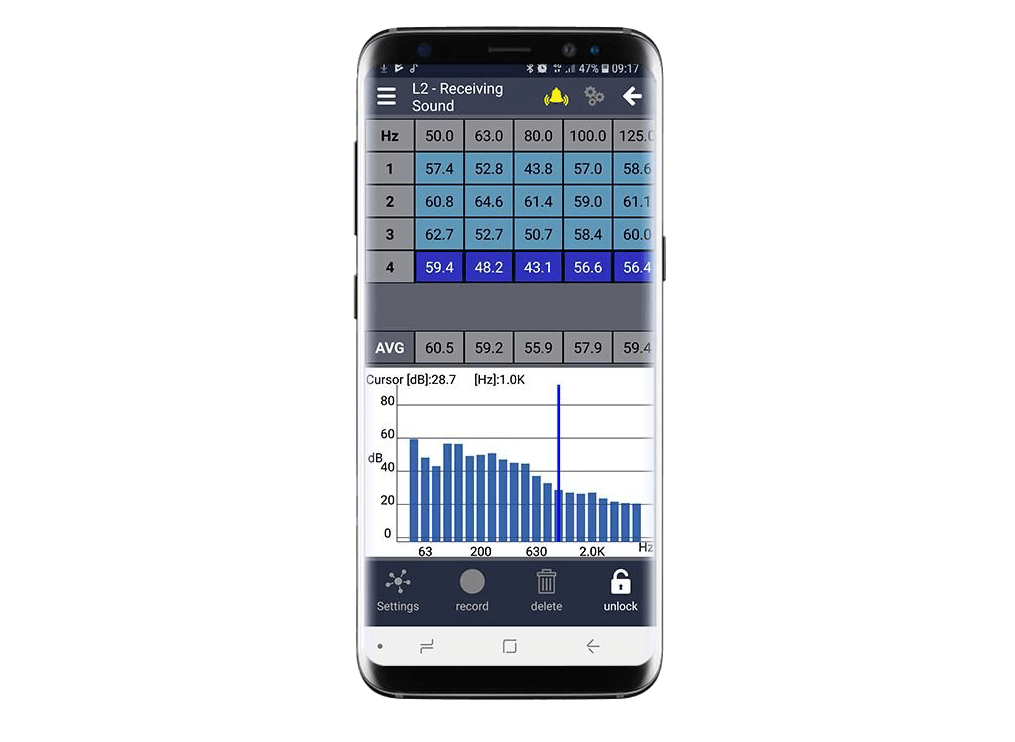
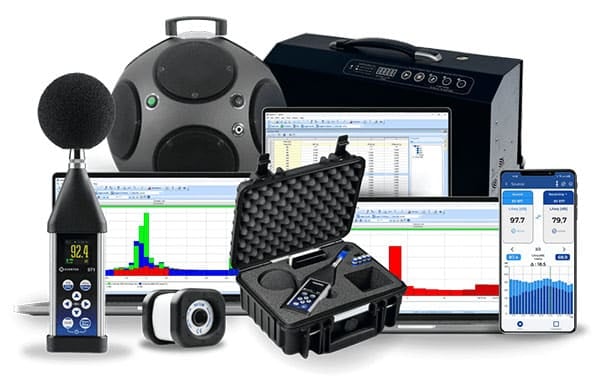
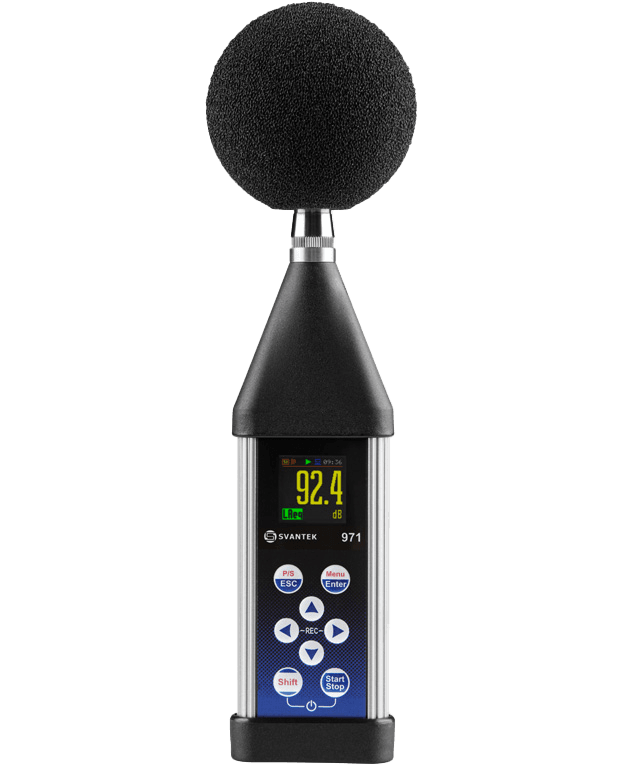
Svantek UK have got the Building Acoustics Pro app. And I know you can’t talk too much about equipment and different people’s kit, and I’m not looking here for you to kind of advocate our kit at all.
But I want to know what your thoughts are, and what it would mean to the users to be able to have a fully integrated application that allows them to take their test and automatically report up into to your portal. What does that mean for people?
Well, I I’ll take a back a level into what the SITMA portal actually does, because that that kind of is the starting process of it. In the SITMA portal, we take raw data from sound level meters and upload into our system, then the testers with SITMA add all the data all the numbers: plot numbers, volume, sizes, construction type, all the iso 140 requirements, and then the SITMA portal produces the test report. That means testers don’t have to sit and copy and paste data and we’re pretty Innovative with that. The next stage which is where you guys are absolutely heading is how can we make that faster. The ultimate goal of SITMA is to increase quality, reduce bad testing and ultimately increase profitability of our testers. That’s always our aim for ATTMA SITMA, The Hub. It is to try and make our members and our clients better off. One of the ways they can do that is time and the next Innovation which is what you guys are working on is making the app connect to the SITMA system which means you can do the full test report. Then you’re not duplicating any data. A full test report from a tablet produces the SITMA test report and you can hand them the report before you leave it’s Innovation absolutely.
Lastly… What’s the future for SITMA, BCTA, Barry Cope?
It’s… It’s big. I would say we treat the companies quite individually we are the BCTA group of companies, but we look at the air tightness testing and measurement association we employ developers so these developers are focused on our platforms, focused on our software. You know we have the ATTMA app. ATTMA is really moving into ventilation heavily… We’ve caused quite the wave in ventilation and that’s been that’s been a fun wave to ride on. I would say because we just do stuff. One of the good things I think about ATTMA and SITMA is we just get on with it. There’s only so many committees you can sit on and talk about what you want to do ATTMA, are the type of people to do it. So, the latest standard we have: ATTMA TFL 1, 90% of that was written by me on an airplane coming back from Australia. Glass of champa in the hand, 24 hours of flying. There isn’t a standard there isn’t a standard for ventilation commissioning other than BG46, so let’s write one. And that’s how we work, the same thing for SITMA. There wasn’t a route for SITMA testers, so let’s make one. And I think that’s where we’re going now, we’re taking ATTMA, and air tightness fire suppression, ventilation. We’re looking at sound testing, ISO 16283 accreditation so upgrading our scope we’re looking at BB93 accreditation, potentially BS 4142 accreditation. And who knows from there so we’re growing and we’re going to keep growing and keep doing what we’re doing. Because now this snowball has started rolling as much as people tried to stop it in the early days now, they’re going to get sucked up and flattened. We’re on a roll.