




How Scan&Paint 3D Improves Acoustic Troubleshooting
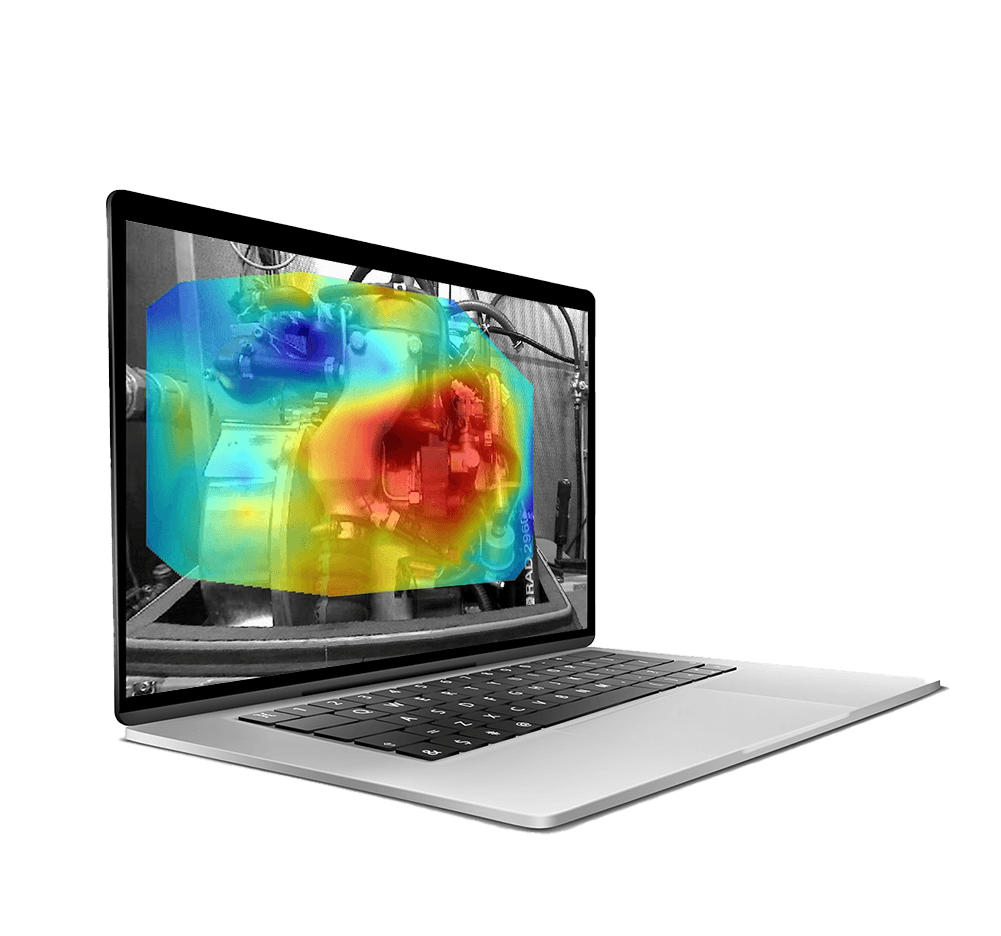
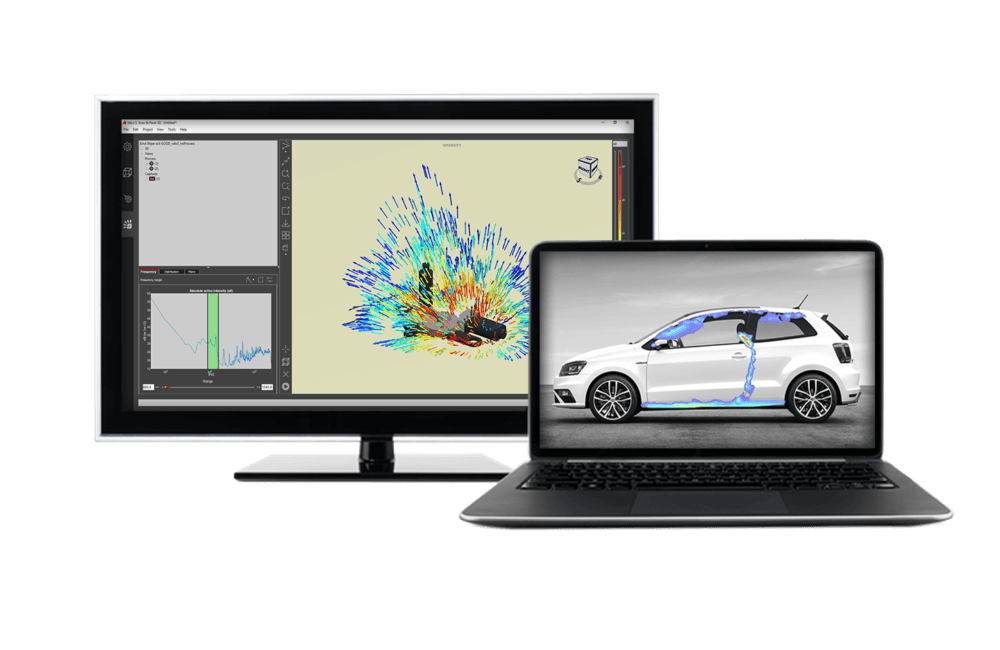
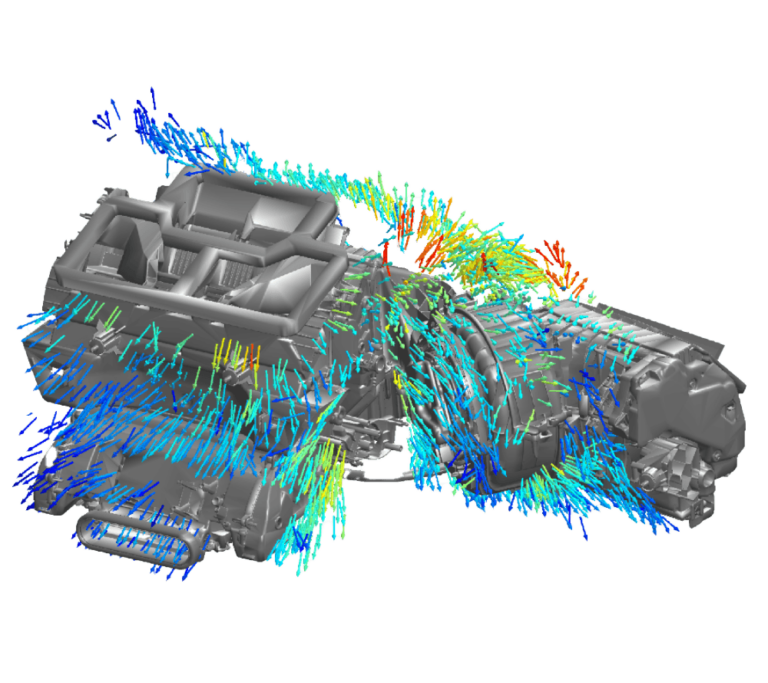
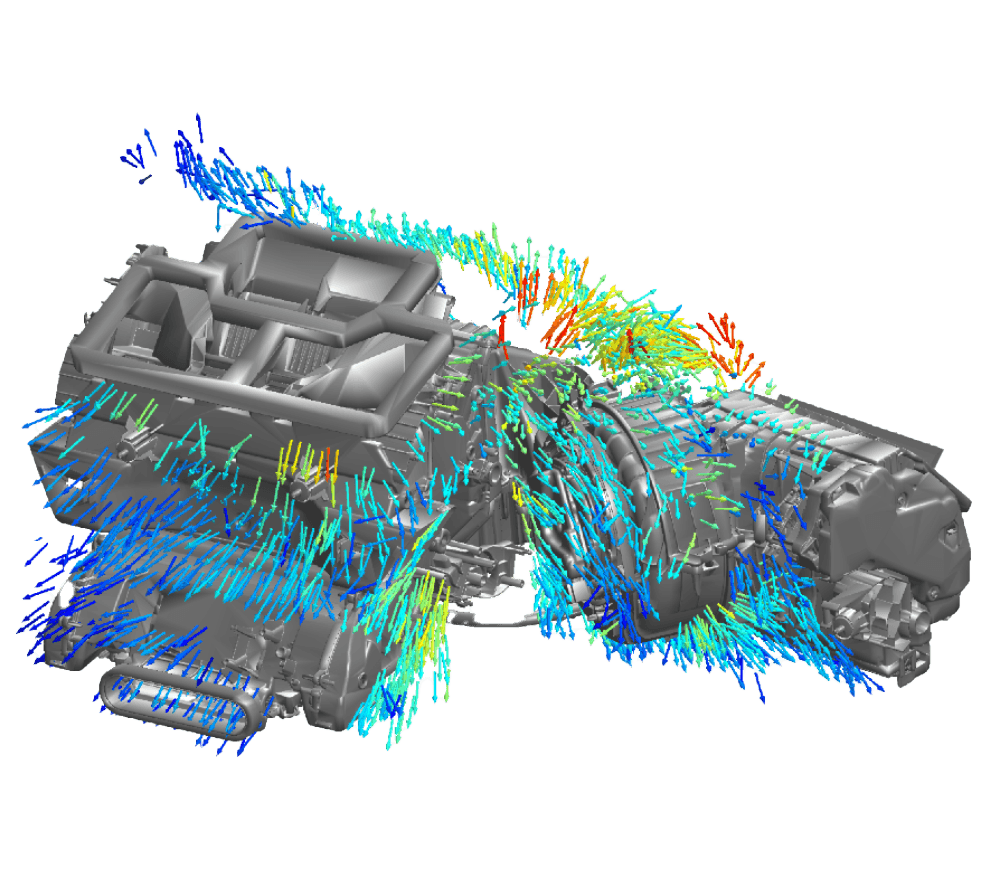
Traditional acoustic measurements can make it difficult to fully understand how sound behaves around a product or within an enclosed environment. Scan&Paint 3D helps engineers and acoustic specialists visualise sound propagation directly on a 3D model, making it easier to identify problematic areas and understand how acoustic energy moves through a space.
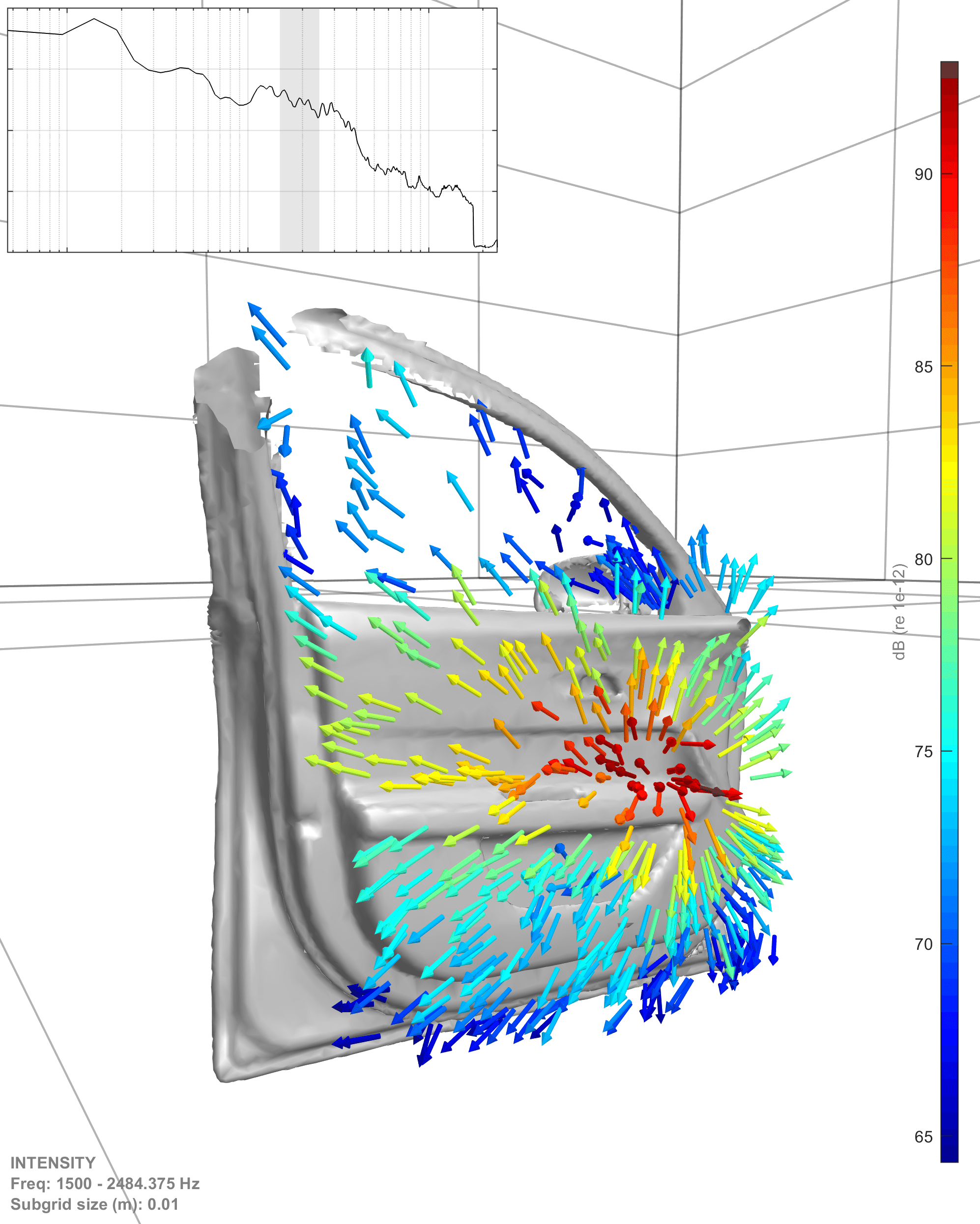
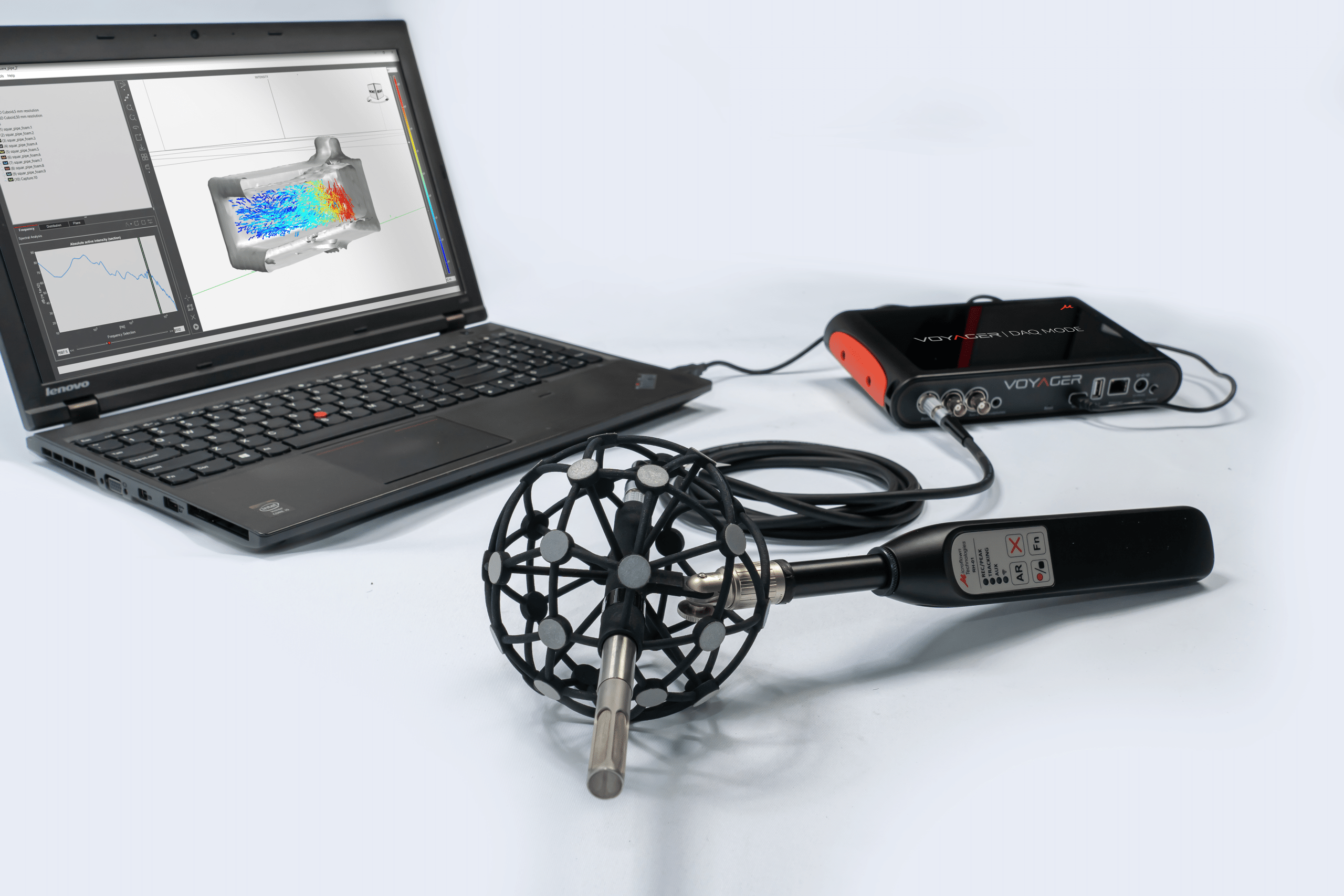
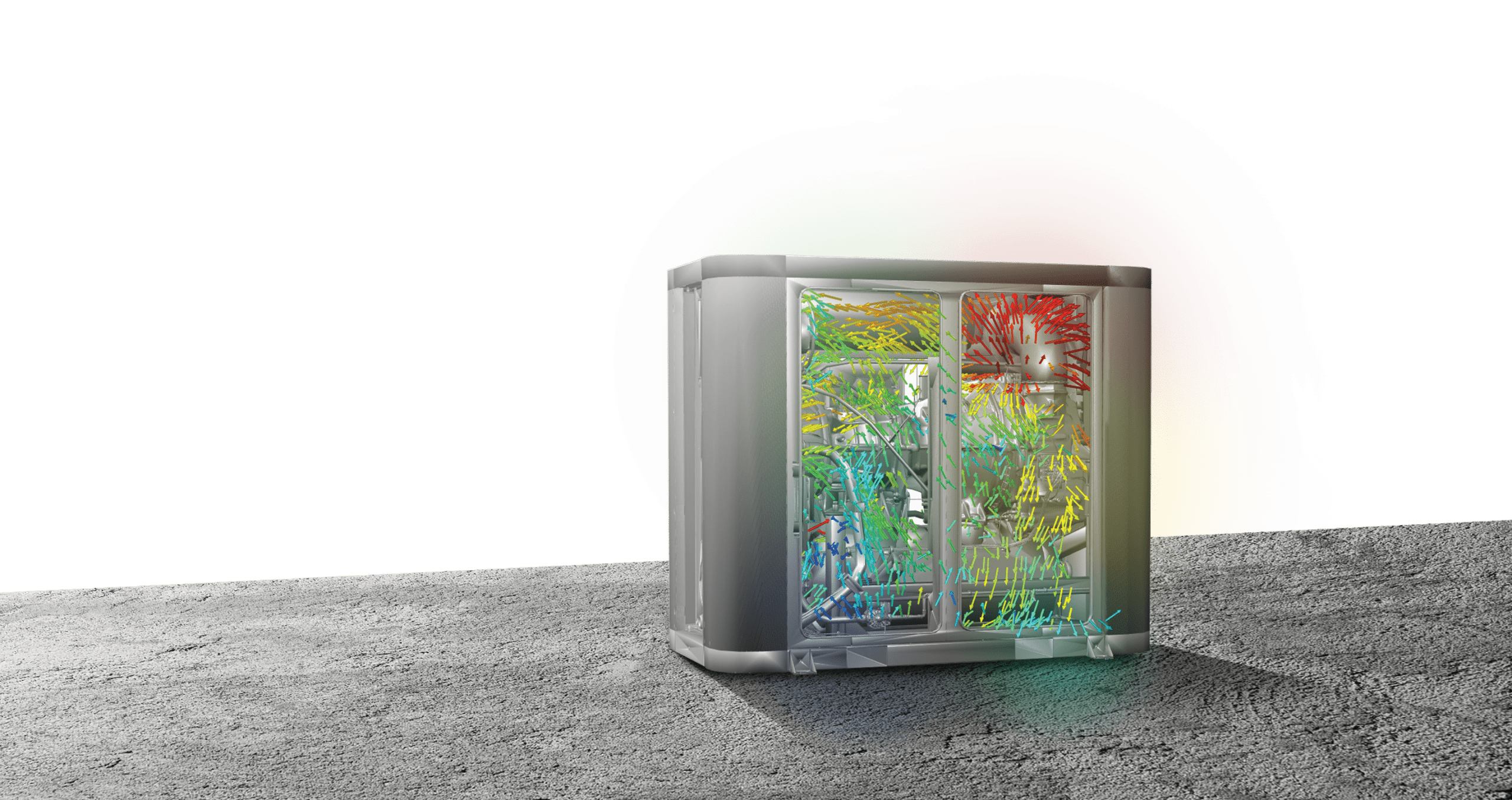
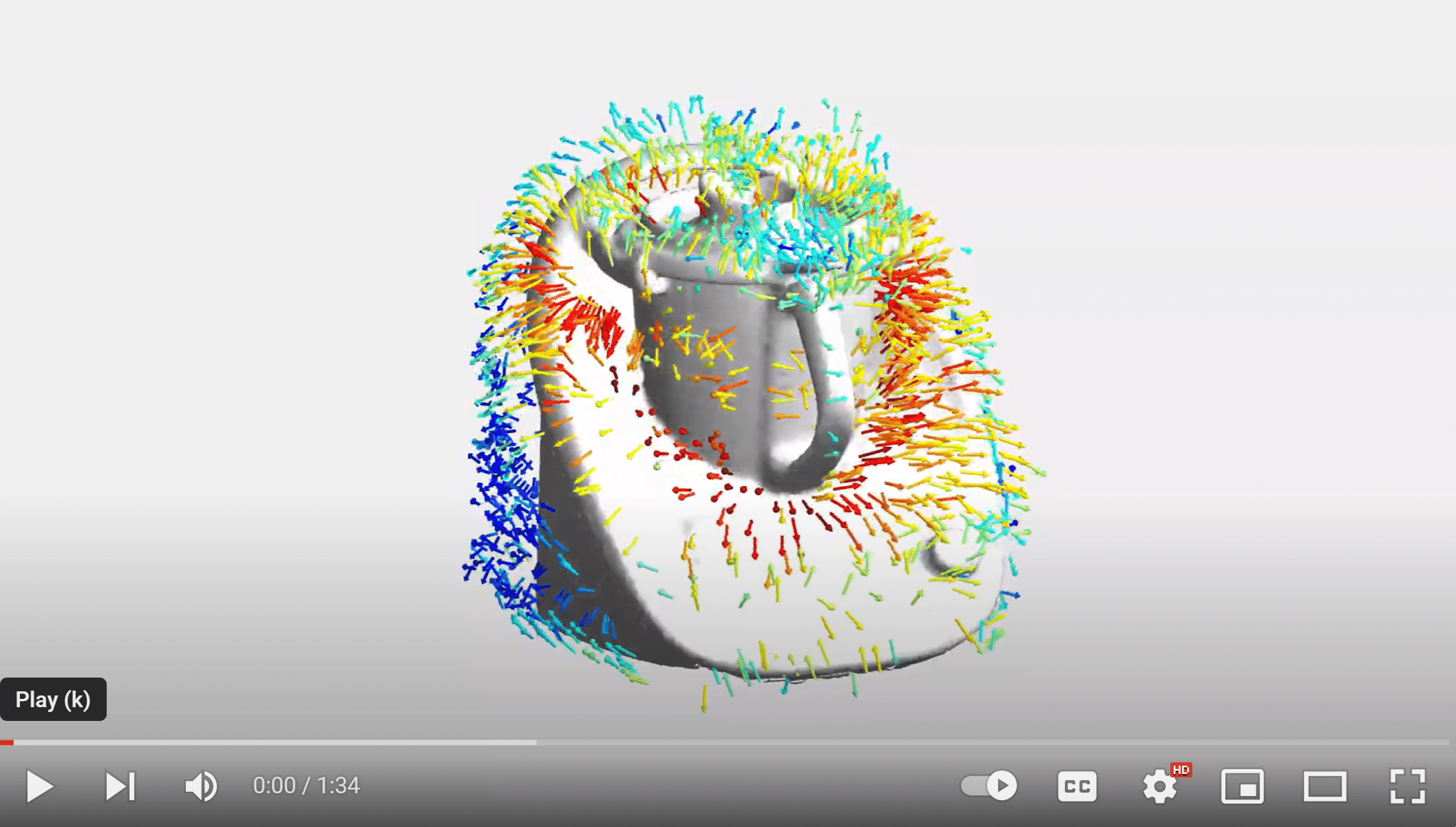
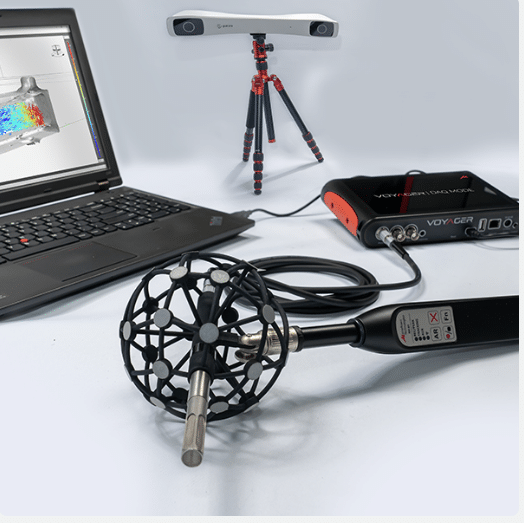
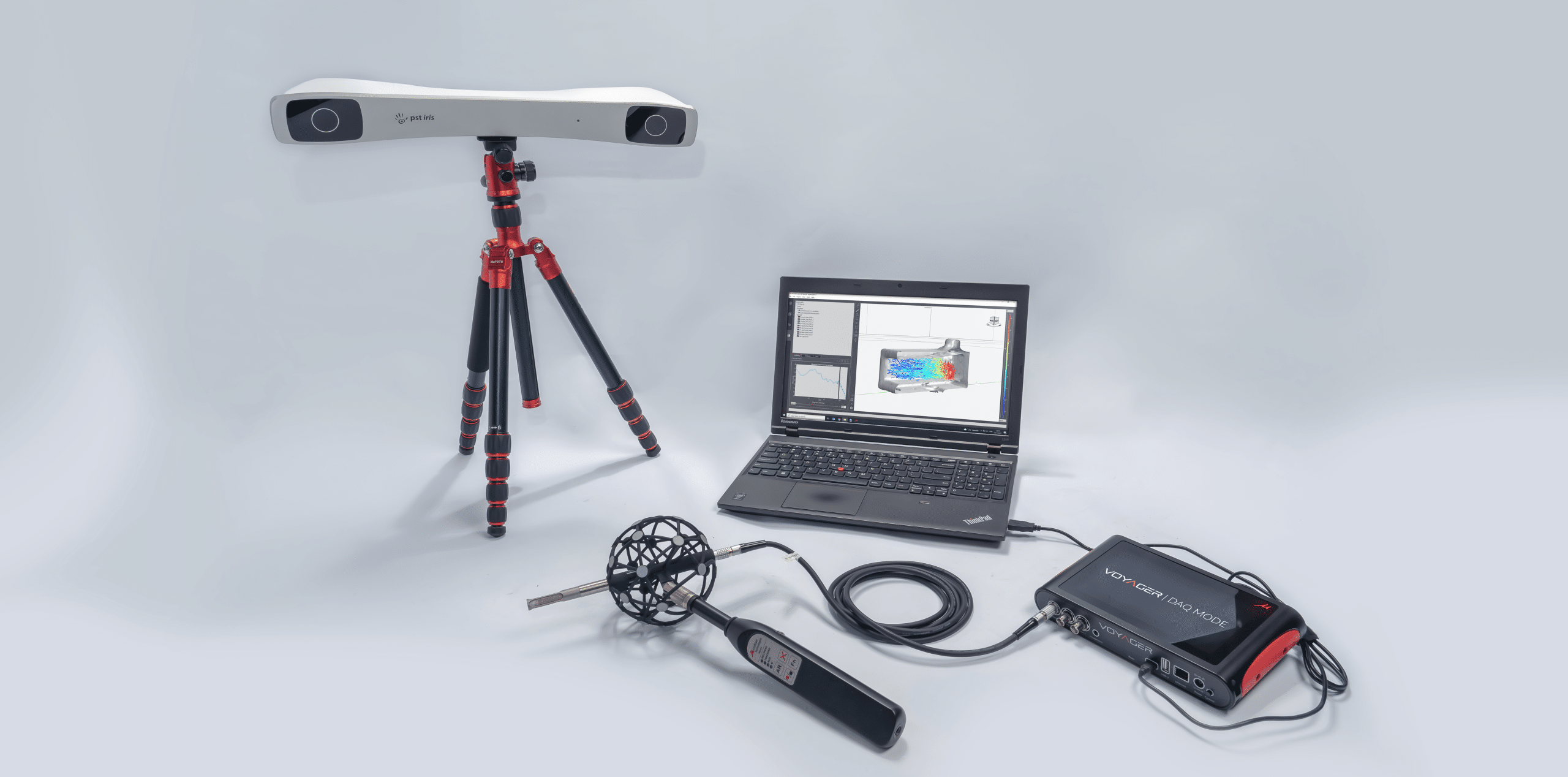
Using Microflown’s 3D sound intensity probe and real-time optical tracking system, Scan&Paint 3D measures acoustic quantities including sound intensity, particle velocity and sound pressure, which can then be visualised as vectors and distributions on a 3D model across a broad frequency range from 20Hz to 10kHz.
Because measurements are displayed directly on an interactive 3D model, complex acoustic behaviour becomes easier to interpret and communicate across engineering teams, product designers, and decision makers.
Designed for Real-World Measurement Environments
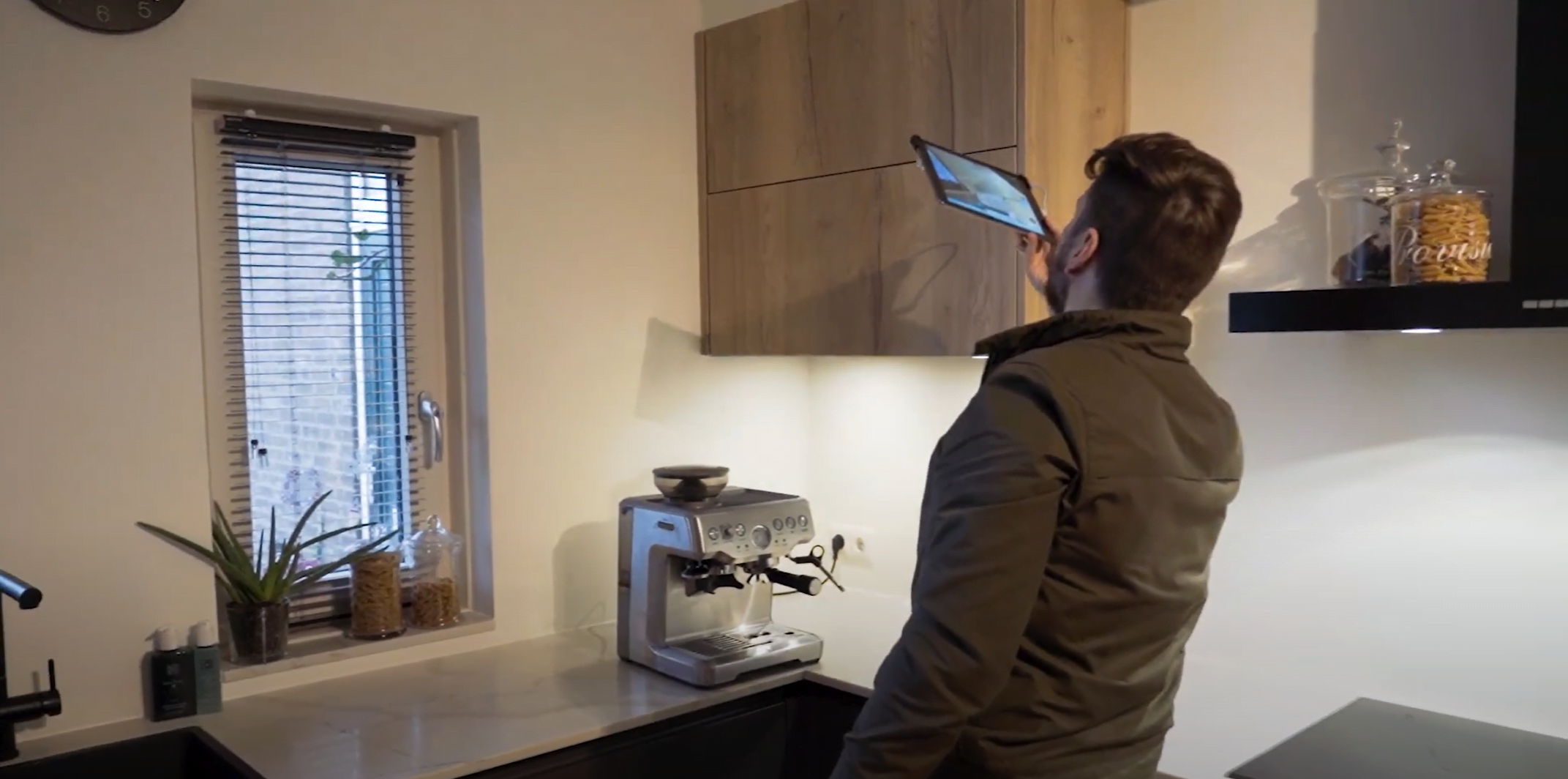
One of the major advantages of Scan&Paint 3D is its ability to operate effectively in challenging real-world environments where traditional laboratory-only approaches can become restrictive.
The system is suitable for use in:
- Vehicle interiors
- Powertrain NVH testing
- Industrial machinery diagnostics
- Product development and benchmarking
- Acoustic troubleshooting
- End-of-line quality control
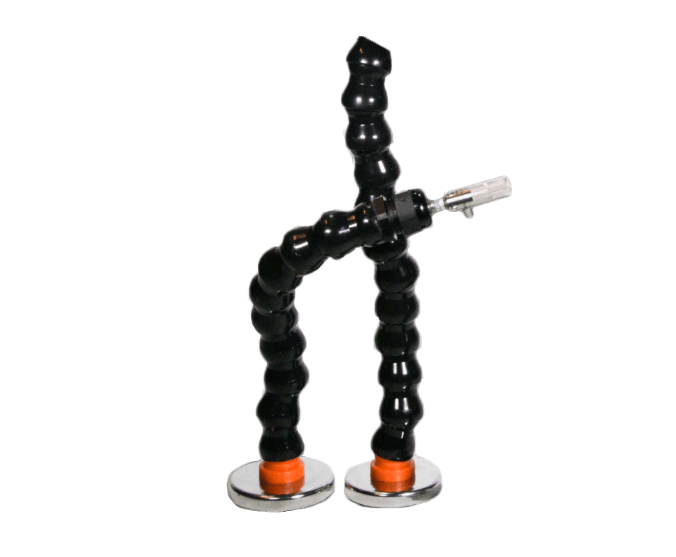
Unlike systems that rely on large fixed microphone setups, the compact 3D probe and optical tracking technology allow measurements to be taken on very small objects and within confined spaces.
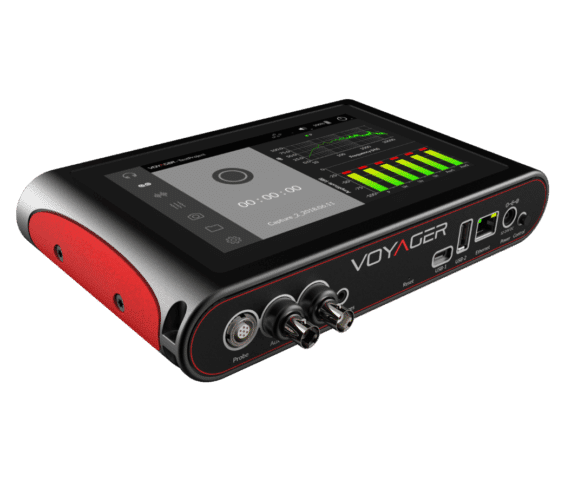
The portable hardware setup also enables fast deployment, helping reduce setup and processing time during testing sessions
Advanced 3D Sound Visualisation Software
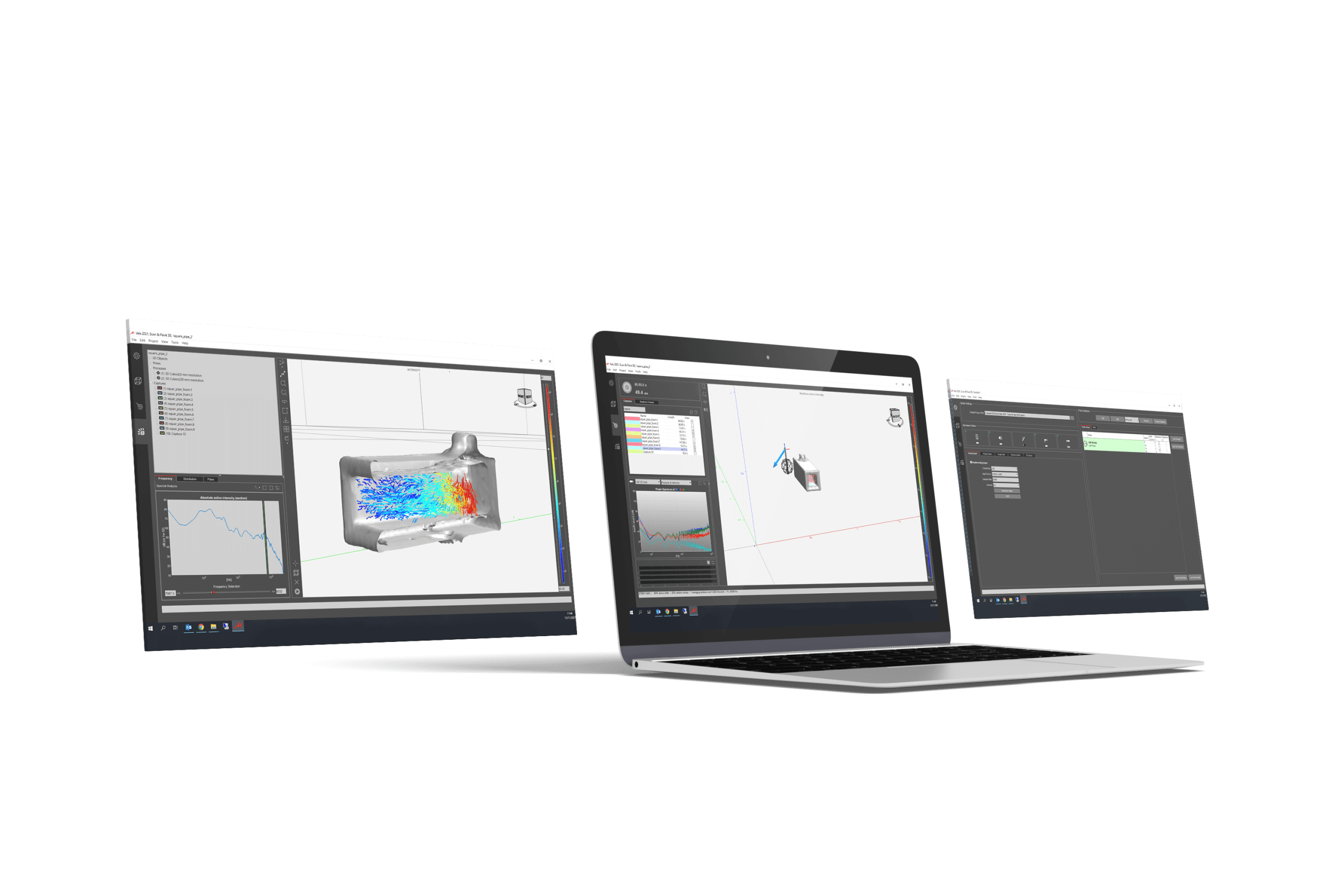
The Scan&Paint 3D platform combines measurement hardware with Microflown’s VELO software environment, providing a user-friendly workflow for importing models, capturing data, and analysing results.
Multiple measurements from different camera positions can also be merged into a single project, making it possible to analyse larger or more complex objects in full 3D.
Supporting Faster Product Development and NVH Analysis
Scan&Paint 3D is used throughout the sound and vibration engineering process, from early-stage product development through to validation and quality control.
By helping engineers quickly locate dominant sound sources and visualise sound radiation behaviour, the system can support:
- Faster troubleshooting
- Improved product refinement
- Reduced development cycles
- Better understanding of structural and airborne noise
- More informed acoustic treatment decisions
The technology has already been applied in automotive and industrial case studies, including electric vehicle interior acoustic optimisation and compressor noise reduction projects.

Frequently Asked Questions
What is Scan&Paint 3D used for?
Scan&Paint 3D is used for acoustic troubleshooting, sound source localisation, NVH analysis, and 3D sound visualisation. It helps engineers identify where sound is generated and how it propagates through products, vehicles, machinery, and enclosed spaces.
What acoustic quantities can Scan&Paint 3D measure?
The system can visualise:
- Sound intensity vectors
- Particle velocity vectors
- Sound pressure distribution
These measurements are displayed directly on a 3D model.
What frequency range does Scan&Paint 3D support?
Scan&Paint 3D operates across a broadband frequency range from 20Hz to 10kHz.
Can Scan&Paint 3D be used outside an anechoic chamber?
Yes. The system is designed for use in real operating environments, including vehicle interiors and non-anechoic conditions.
What industries use Scan&Paint 3D?
Applications include:
- Automotive NVH
- Aerospace acoustics
- Industrial equipment testing
- Product development
- Acoustic consultancy
- Manufacturing quality control
How does the sensor tracking system work?
The system uses an infrared stereo camera to automatically track the position and orientation of the probe in real time during measurement.
What makes Scan&Paint 3D different from conventional acoustic measurement methods?
Scan&Paint 3D combines 3D sound intensity measurements, particle velocity sensing, optical tracking, and interactive visualisation into a portable all-in-one solution. This allows users to quickly understand complex sound fields with very high spatial resolution.