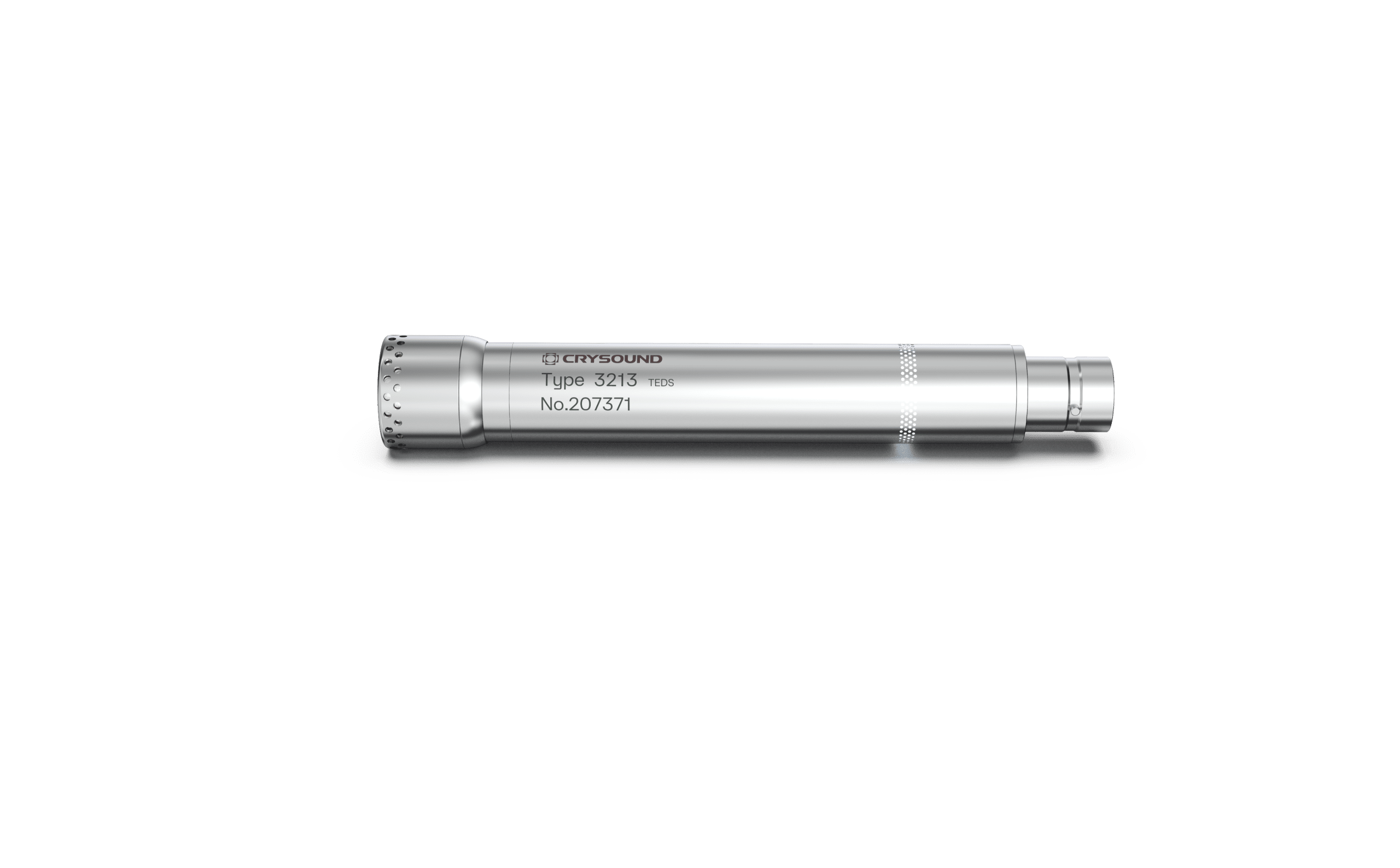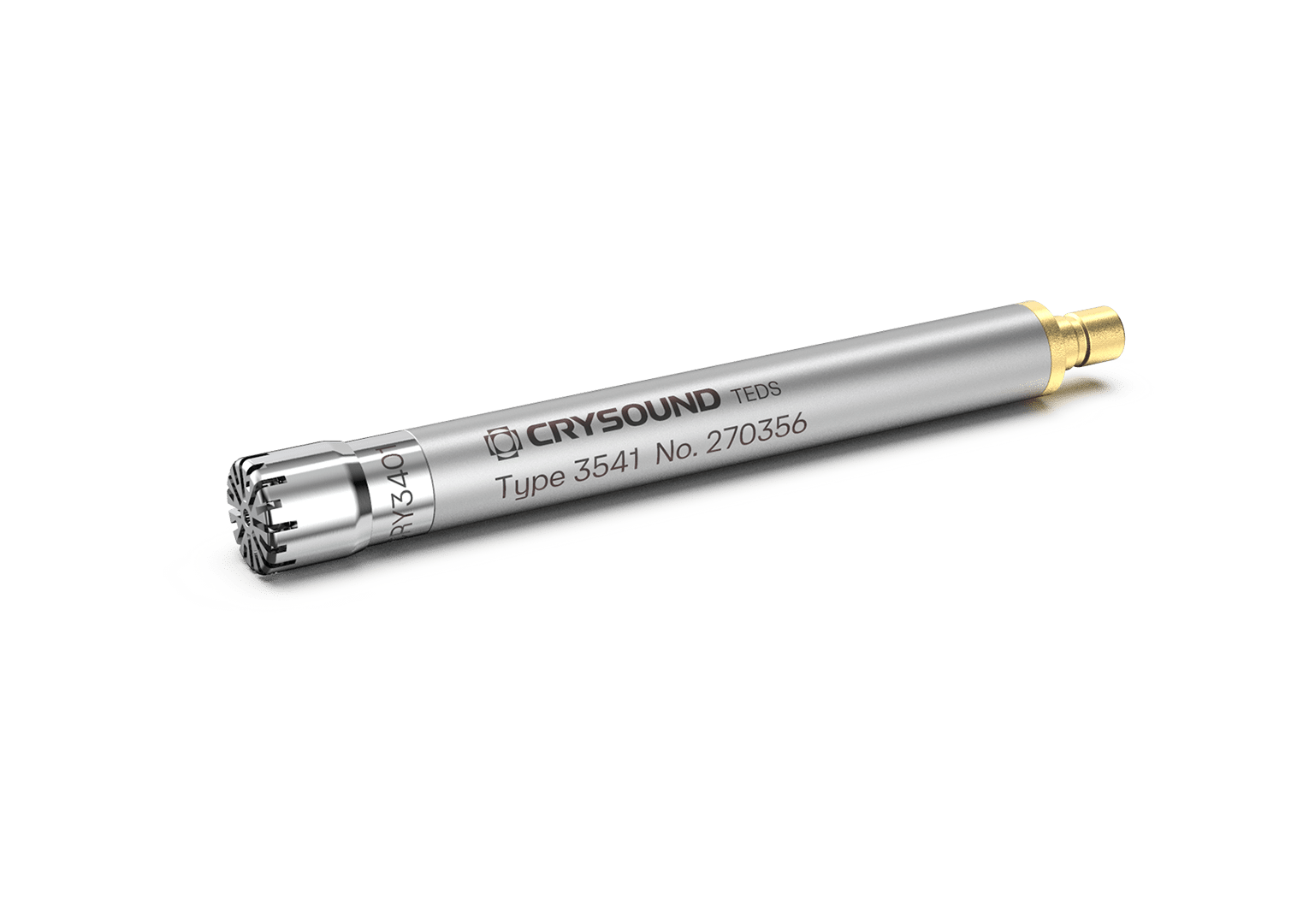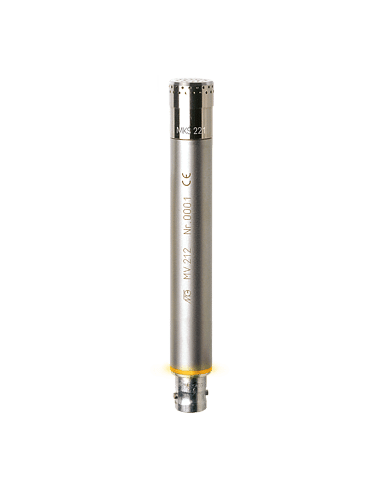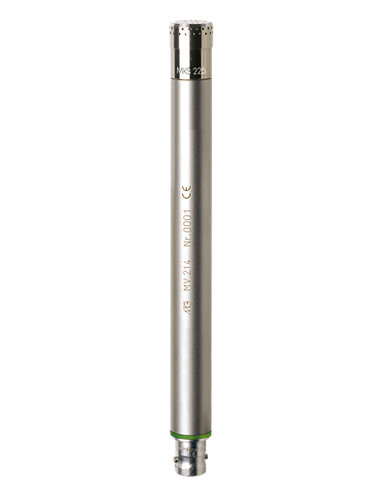

What is a measurement microphone? Well, it’s not the one used on stage, nor in a podcast studio, and definitely not one of the many in your phone or noise-cancelling headphones. It doesn’t colour or enhance the sound but (surprise!) is designed to measure sound pressure level accurately, repeatably and the performance is traceable to international standards.

It needs to tell the truth, whether it be for monitoring noise exposure, designing quieter cars, better headphones or designing acoustics of buildings, or even controlling quality in production.
Whether used in IEC 61672 sound level meters or other data acquisition systems, the microphone is at the front-end of a measurement chain that must deliver rock-solid, utterly trustworthy results. The measurements may need to stand up in a court of law. Equally, they can make or break the commercial success of an audio product, or justify whether to invest £100K in tooling changes to solve a noise problem in a vehicle.
What is a Measurement Microphone? A Quick Summary:
- Measurement microphones comply with IEC 61094 standards and are designed to:
- Deliver a flat frequency response (±1–2 dB) over a specified range.
- Remain stable across temperature, humidity, and years of use.
- Be calibrated and referenced against traceable standards (IEC 61094), and allow field “spot” calibration for on-site verification.
- Generally, they are required to be omni-directional, not like a stage or recording microphone.
You may say, but my studio measurement microphone is a measurement microphone – it’s got a flat frequency response, and it gives me a noise floor and sensitivity in the specification? Yes, granted there is some crossover, but check for their compliance with IEC 61094 – for example, are there published temperature and static pressure coefficients?

Origins and Technologies
The technology for measurement microphones traces back to the early 20th century, in fact to E.C. Wente at Bell Labs in 1917 when he patented the first “condenser” microphone, albeit the application being for telephones. Ultimately researchers needed reliable ways to quantify sound pressure and Brüel & Kjær (B&K) became the pioneers in the “commercialisation” of this capacitor principle or “condenser” microphone for measurement applications, the condenser quickly becoming the de facto reference standard.
Condenser microphones rely on a thin metal (steel, nickel, titanium) diaphragm 2 to 5µmetres thick, and 10-30µm (we’re talking less than human hair, no volume conditioning!) away from a rigid backplate forming a capacitor and a fixed electric field is applied. Sound pressure moves the diaphragm, modulating capacitance, which is converted to voltage.
Classic condenser capsules use 200 V external polarization to create the electric field.
Whilst pre-polarised “electret” microphones still work on the capacitor principle – unlike the classic condenser microphone, the fixed electric field is provided by the permanently charged backplate (no rubbing of balloons). In fact, the electret microphone keeps its charge for decades and it makes it easier to power, using IEPE (constant current) or 48 V phantom power, while still offering precision-grade performance. “Yes, but my studio measurement microphone uses 48V phantom power and its “electret”.
MEMS
Microphones – Micro-Electro-Mechanical Systems. Whilst the transducer principle is the same, the construction and fabrication of MEMS microphones is very different to the electrets. The consumer products world was almost entirely using low cost electrets, which have now been largely displaced by the smaller, even lower cost MEMS devices, where they are easily integrated into electronics, using multiple microphones, for noise-cancelling, beam-steering arrays, voice recognition in our smartphones, earbuds, in-car infotainment and wearables.
Where for many years MEMS performance did not achieve the frequency response, noise floor, linearity and stability requirements for measurement instrumentation, “measurement-grade” MEMS have been continually improving such that they are now achieving the performance requirements for implementation into Class 1 IEC 61672 sound level meter applications.
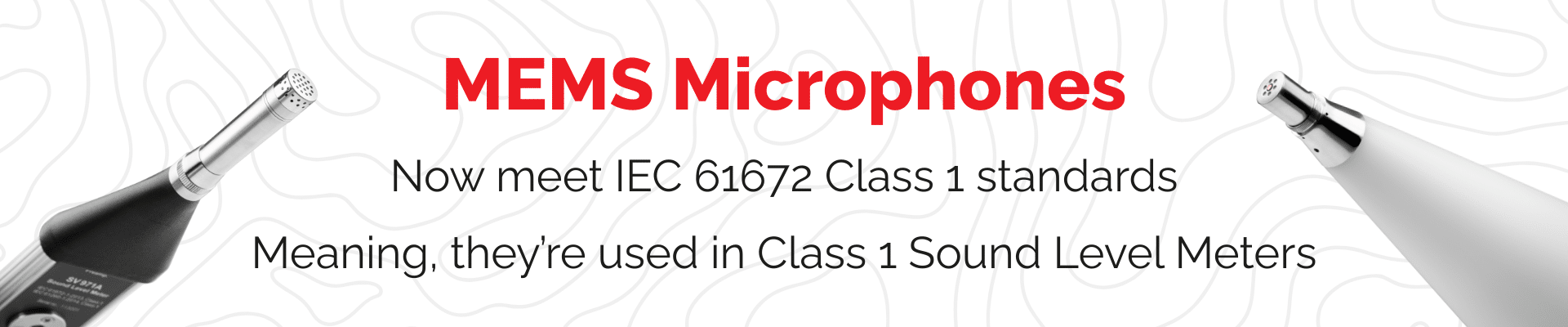
Indeed, manufacturers such as Svantek have provided type-approved IEC 61672 sound level meter and noise exposure meters products using MEMS. Furthermore, the reduced cost of the microphone element has led to innovations such as using multiple MEMS’ microphones in a sound level meter, not just for the redundancy benefit, but also to improve dynamic range, enable real-time self-checking and even combine with beamforming arrays to simultaneously locate the noise source.
So what has been the “breakthrough” for MEMS introduction to the measurement world? Well, largely it’s been about incremental improvements over the last 10 years. Is it a new transducer principle? No, the majority are capacitive. In which case, a common question would have been how could a MEMS microphone with such a small diaphragm size ever achieve a noise floor close to say a 1/2” inch electret/condenser microphone.
There are a number of factors to enable surprisingly good signal to noise. For now, two:
1. Continuous advancements in the micro-fabrication process, means the distance between the microphone “diaphragm” and what is the “backplate” is now much less – remember the 20 to 30µm for a conventional condenser/electret? In a MEMS it gets down to 1 to 5µm.
2. The conditioning electronics is integrated onto the silicon in which the very microphone is constructed. Yes – feel free to Google max SPL!
Also, polarisation is right on the chip (pre-polarisation not necessary), and of course the option to get the signal digitised before onward journey off the chip.
But Why Do Condensers Still Dominate?
- Proven stability. Decades of data reassure regulators and researchers that condenser capsules hold calibration over long periods. MEMS doesn’t have the same historical record yet. As of writing MEMS microphones at the product development level still are to be calibrated against IEC61094 condenser microphones.
- Performance at extremes. For ultra-low-noise work, wideband measurements, or very high SPL, condensers still outperform MEMS.

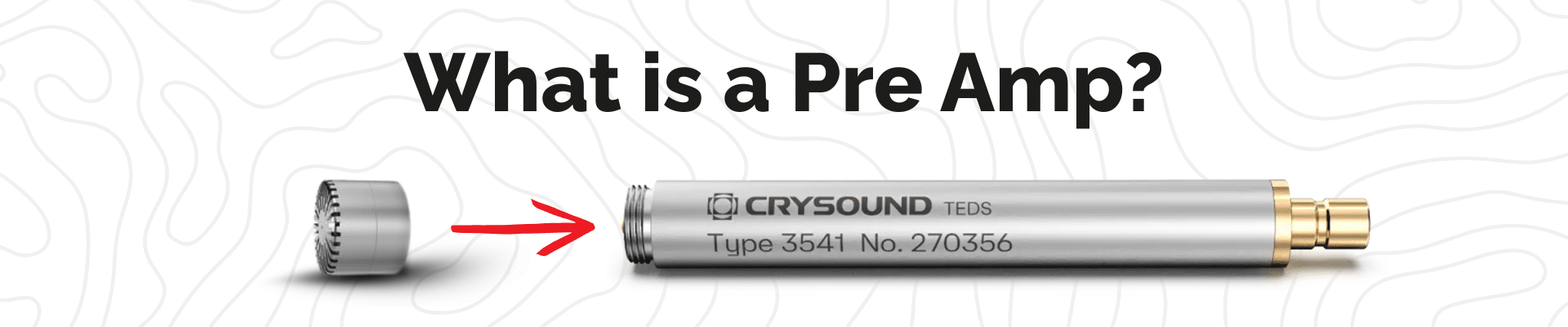
The terminology can be confusing. We’ll hear “measurement set” used – that will be the capsule and pre-amplifier, the microphone capsule sometimes being called the “mic”, the “mic” sometimes is the “measurement set”.
So What is Interesting About the Pre-Amp?
A measurement microphone capsule on its own is essentially a high-impedance capacitor. That signal won’t travel far without being loaded by the system – the cable and what’s being connected to (impedance). So we need a microphone preamplifier: it converts the vulnerable capsule signal output into a robust “low-impedance” signal that can run through cables without degrading.
Microphone Preamps (electronics!):
- Traditional preamps running on ±200 V polarization supplies.
- IEPE pre-amps (constant current powered) – now the pre-amp type of choice, the cables are much lower cost than the 7 pin Lemo cables used for the externally polarised microphone. IEPE powering doesn’t exclude the use of externally-powered microphone capsules – see what MTG do!
- 48 V phantom-powered preamps, making measurement mics compatible with pro audio gear. 48 V phantom power feels like it should always outperform a single-ended IEPE system for noise immunity — but not necessarily! A well-designed IEPE preamp uses a low-impedance constant-current drive with coaxial shielding, generally delivering lower noise, better stability, and longer cable runs than many budget phantom-powered setups. And 48V systems roll off a lot earlier, at 20Hz, not 5Hz.
Pre-amps in principle are transparent and boring, but their design is not in the least trivial.
Applications and Measurement Types
There is a “sweet spot” measurement microphone – the ubiquitous ½” : sensitivity 50mV/Pa, frequency range 5Hz-20kHz, noise floor of 15-17dBA, and max SPL 144dB pk (be sure to check the manufacturer’s definitions!)
But why do we need more than the ½” sweet-spot-of-spots microphone?

Different sizes and designs exist to handle the variety of applications, particularly the extremes:
- ¼” and ⅛” microphones – smaller diaphragms extend the frequency range well into the ultrasonic (up to 100 kHz or more) but at the expense of higher noise. Useful for transducer testing, ultrasound, and leak detection. i.e. these measure above the capability of human hearing (especially mine)
- 1″ microphones – larger diaphragms offer the lowest noise floor, ideal for very quiet environments or precision lab work, but with a limited upper frequency range. These can measure below the threshold of human hearing (especially mine).
- High-SPL microphones – ruggedized designs (often ¼”) can withstand 170–180 dB SPL, suitable for explosions, jet engines, or firearm testing. My favourite example was when we were tasked with measuring the noise levels at the ear when using a shoulder-launched missile – suffice to say, nobody got hurt
- Low-frequency microphones – optimized for infra- and infrasound (below 20 Hz), used in seismic monitoring, wind turbine research, and structural acoustics.
- Ear simulators and coupler microphones – pressure microphones built into artificial ears and mouths to test headphones, hearing aids, and communication devices to standards (e.g., IEC 60318 series). One example – I won’t say “Harman reference curve” – and I won’t mention Sean Olive! So I won’t, but you must look it up!
There’s Only Pressure
And finally : what about “free-field”, “diffuse” and “pressure” sound fields?
All measurement microphones measure sound pressure – so you could say they are all pressure microphones? They are, and you can, but they aren’t. I’ll finish there with that enigmatic statement and :
Close
I’ve been privileged to have had contact with many designers and users of measurement microphones, with experience collectively adding up to centuries (including John Shelton) (no implication on age with that reference of course), and the more I ask “why, how and what”, as we encounter different scenarios and tasks for measurement microphones, the more nuanced is the subject, in terms of their design and their application.
So, for me, the subject of the measurement microphone is never boring, whether it be insights from the designers (nod to the engineers at MTG, GRAS, AKG …) or seeing how the MEMS technologies are enhancing measurement systems and enabling new measurement tools and indeed, systems.
And there’s the irony – “boring” – that’s exactly what we need the measurement microphone to be! Invisible in the process, acquiring data without bias, distortion or limitation – to give us the whole truth and nothing but the truth.
By Ian Macfarlane, Senior Applications Engineer